Pressed spear fencing combines the open visibility of tubular steel fencing with a more security-focused top profile. For schools, commercial properties, government facilities and residential developments, it can provide a defined perimeter without creating the closed-in appearance of a solid fence. But the finished result depends on more than choosing a spear-shaped top. Picket dimensions, spacing, fence height, rails, posts, coatings and gate design all affect how the system looks and performs.
This guide explains the main decisions involved in specifying pressed spear fencing and how to make the fence line and access gates work as one coordinated system. For an overview of Boswen’s broader options, see our steel fencing systems.
What is pressed spear fencing?
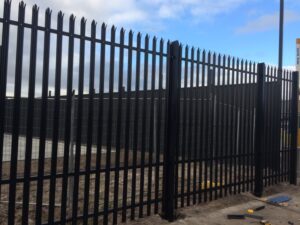
Pressed spear fencing is a type of tubular steel fencing in which the upper end of each vertical picket is formed into a pointed or spear-like profile. The pickets are fixed between horizontal rails and supported by steel posts to create a rigid, open-style barrier. The pointed top gives the fence a more defensive appearance than a flat-top tubular system while retaining clear sightlines through the fence.
The term ‘pressed spear’ describes the formed picket head rather than a single universal fence specification. Panel height, picket size, spacing, rail configuration, post size and finish can all vary according to the project. That is why two spear-top fences can look similar from a distance yet be designed for very different applications.
Boswen’s current pressed spear-top fence listing, for example, shows one configuration using pressed square-hollow-section pickets and a powder-coated finish. Those dimensions are useful as a product example, but a project specification should still be confirmed against the site, required opening sizes and performance objectives.
Spear-top picket profiles: what changes?
The spear head is the most recognisable feature, but the complete picket profile determines much of the fence’s visual weight and rigidity. Pressed spear pickets are commonly formed from tubular steel. Designers can vary the picket section, the shape of the pressed top and the relationship between the pickets and rails to create a lighter architectural look or a more security-oriented perimeter.
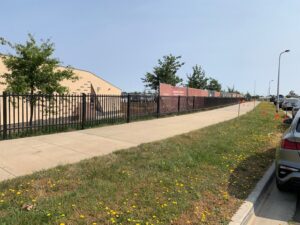
For a school frontage or landscaped commercial development, a consistent picket rhythm and clean powder-coated finish may be a priority. At a service yard, warehouse boundary or controlled-access site, the emphasis may shift toward a taller system, robust posts and a profile that provides a stronger visual deterrent.
Pressed spear fencing should also be distinguished from palisade fencing. Both use vertical steel members with pointed tops, but palisade systems use heavier formed pales and are generally selected where a more overt high-security barrier is required. If the project risk profile is higher, compare the proposed spear-top system with a dedicated palisade fencing system rather than assuming the two products are interchangeable.
Picket spacing, visibility and access control
Picket spacing affects appearance, visibility and how easily a person can reach through or interact with the fence line. Wider spacing can create a more open architectural effect, while closer spacing creates a denser visual barrier. The appropriate dimension should not be chosen from appearance alone. It needs to reflect the purpose of the fence, the people using the site and any project-specific safety or compliance requirements.
Visibility can be an advantage around commercial entrances, schools and public-facing boundaries because staff can maintain sightlines through the perimeter. It can also support passive surveillance around car parks and entry points. However, a highly visible fence does not provide privacy, so sites that need visual screening may require a different product or a separate screening treatment.
For sites used by children or the public, designers should pay particular attention to openings, climbability, entrapment risks and the relationship between the fence and nearby objects. The final layout should be assessed against the specific use of the site and the standards or regulations that apply to that project.
Choosing the right fence height and security level
Height is one of the first decisions people notice, but it should follow the risk assessment rather than lead it. A boundary that mainly defines landscaped or residential space may have very different requirements from a school perimeter, commercial storage yard or government facility.
A taller spear-top fence generally creates a stronger physical and visual barrier, but height alone does not determine security. Post strength, foundations, picket spacing, rail connections, gate hardware and the condition of the surrounding perimeter are equally important. A tall fence paired with an underspecified gate or an easily bypassed side boundary can still leave a weak point.
It is also important to consider planning controls, sightlines at driveways, emergency access, pedestrian circulation and any local or project-specific restrictions before finalising the height. For higher-risk locations, Boswen can assess whether pressed spear fencing is suitable or whether a more specialised security fence should be considered.
Rails and posts: the structure behind the appearance
The visible pickets receive most of the attention, but rails and posts form the structural framework of the fence. Horizontal rails hold the pickets in alignment, while posts transfer loads into the footing or supporting structure. The number and size of these elements should reflect panel dimensions, fence height, exposure, ground conditions and the way the site will be used.
Post spacing also influences the proportions of the finished fence. Consistent panel bays can create a clean architectural rhythm, while changes in grade may require stepped or raked sections. On sloping sites, these details should be resolved early so the bottom gap, spear alignment and top line look intentional rather than improvised during installation.
Where fences connect to masonry, retaining walls, existing structures or automated gates, the interfaces need particular attention. The most successful projects treat these junctions as part of the overall design instead of as separate items.
Finishes: galvanising, powder coating and colour
Steel fencing needs a finish suited to its environment and the desired appearance. Common approaches include galvanised steel, powder coating, or a coating system selected to meet the project specification. Powder coating is popular for pressed spear fencing because it creates a consistent architectural finish and offers a broad choice of colours.
Colour can change the character of the fence significantly. Dark finishes often reduce visual prominence and allow landscaping or buildings to remain the focus, while lighter or project-specific colours can be used to coordinate with façades, signage or school branding.
Environmental exposure should influence the coating decision. Coastal, industrial or corrosive locations may demand a different treatment from a protected inland site. Rather than selecting a finish only by colour, confirm the substrate preparation, coating system and maintenance expectations appropriate to the location.
Matching pedestrian and vehicle gates
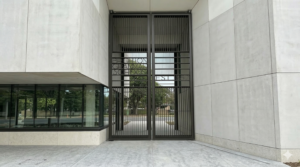
A spear-top fence is most effective when the gates are designed as part of the same perimeter. Mismatched picket spacing, rail levels or finishes can make an entrance look like an afterthought. More importantly, an unsuitable gate can become the operational or security weak point of the boundary.
For pedestrian gates, match the vertical picket rhythm and spear profile where practical, then consider hinges, latching, closing behaviour and access-control hardware. Schools, offices and controlled facilities may also need intercoms, card readers or other entry systems. These devices should be coordinated with the gate frame so they are usable without compromising the intended perimeter design.
Vehicle gates require additional planning. The opening width, vehicle type, traffic frequency, available swing or run-back space and automation requirements will influence whether a swing, sliding, cantilever or another gate configuration is appropriate. A gate that visually matches the fence but conflicts with truck turning movements or daily traffic will not be a successful solution.
For automated entrances, safety devices, controls, foundations and service access should be designed with the gate rather than added later. The goal is a coordinated fence-and-gate system with consistent security, appearance and day-to-day usability.
Where pressed spear fencing works best
Pressed spear fencing is particularly useful where a project needs a durable steel boundary with open visibility and a more assertive top profile than standard flat-top tubular fencing. Typical applications can include school boundaries, commercial properties, apartment or residential developments, landscaped public areas, car parks, government facilities and lower-to-medium risk industrial perimeters.
It is not automatically the best choice for every security requirement. Sites facing a high likelihood of deliberate intrusion, cutting or sustained attack may need palisade, anti-climb mesh or another high-security system. Sites needing privacy may be better served by slat, solid panel or screened fencing. Choosing the right product starts with the purpose of the boundary, not with a preferred appearance alone.
A practical specification checklist
Before requesting a quotation or approving shop drawings, confirm the following:
- The purpose of the fence: boundary definition, access control, deterrence, presentation, or a combination of these.
- Required fence height and any planning, safety or site-specific constraints.
- Picket profile, size and spacing, including visibility and reach-through considerations.
- Rail and post configuration appropriate to the panel size, ground conditions and exposure.
- How changes in ground level will be handled at stepped or sloping sections.
- The coating or finish required for the environment and architectural palette.
- Pedestrian and vehicle gate locations, widths and expected traffic.
- Automation, access control and safety requirements where gates are motorised.
- Interfaces with walls, retaining structures, existing fencing, landscaping and services.
- Maintenance access and how damaged components can be repaired or replaced over time.
Specify the fence and gate as one system
The strongest pressed spear fencing projects are not designed by selecting a panel first and solving everything else afterwards. The fence profile, picket spacing, posts, coatings, pedestrian gates and vehicle gates should be considered together from the beginning. This creates a perimeter that is more consistent visually and better aligned with how the property actually operates.
Boswen designs, fabricates and installs custom steel fencing and gates for projects across Melbourne. If you are comparing pressed spear fencing with other perimeter options, our team can review the site, intended use and access requirements before recommending a suitable configuration. Request a custom spear-top fencing recommendation for your project.
Frequently Asked Questions
What is pressed spear fencing?
Pressed spear fencing is tubular steel fencing with vertical pickets whose tops are mechanically formed into pointed spear profiles. The pickets are fixed between horizontal rails and supported by steel posts, creating an open fence with a stronger visual deterrent than a standard flat-top tubular design.
Is pressed spear fencing the same as palisade fencing?
No. Both can have pointed vertical elements, but pressed spear fencing generally uses tubular pickets, while palisade fencing uses heavier formed steel pales designed for more security-focused applications. The right option depends on the site risk, required appearance and project specification.
How should picket spacing be chosen?
Spacing should reflect the intended security level, visibility, site users, appearance and any applicable safety or compliance requirements. There is no single spacing that is correct for every project.
Can pressed spear fencing be matched with automatic gates?
Yes. Vehicle and pedestrian gates can be fabricated with matching picket profiles, rail lines and finishes. For automated vehicle gates, the gate type, access controls and safety devices should be planned around the site layout and traffic requirements.
What finish is best for pressed spear fencing?
The finish should suit the environment and desired appearance. Galvanised and powder-coated systems are common, but coastal, industrial or corrosive environments may require a project-specific coating specification. Boswen can help determine the appropriate treatment for the site.