School access systems have to do more than close a boundary. They need to support secure entry, reliable daily operation and clear separation between school grounds and surrounding traffic, while fitting the way staff, visitors and families move through the site.
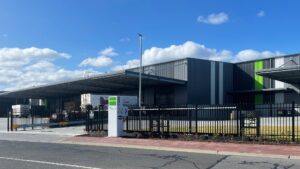
At Knox Park Primary School in Victoria, Boswen was engaged to improve perimeter security and access control with a coordinated fencing and automated-gate solution. The documented scope included metal perimeter fencing, an automatic sliding gate, a V2 Italian-made automation system, electrical setup, system tuning and calibration, and on-site testing.
The project provides a useful example of why school fencing and automatic gates should be planned as one access system rather than as separate products. The physical fence establishes the secure boundary; the gate controls vehicle entry; and the motor, controls and commissioning determine how reliably that access point performs during daily use.
Project Overview
| Project detail | Verified scope |
| Project | Knox Park Primary School Security Upgrade |
| Sector | Education – primary school |
| Location | Victoria, Australia |
| Perimeter works | Metal / steel picket perimeter fencing |
| Vehicle access | Automatic sliding gate system |
| Automation | V2 Italian-made gate motor / automation system |
| Technical works | Electrical setup, tuning, calibration, on-site installation and testing |
The School Access Challenge
Education sites have a different access profile from a typical commercial property. The perimeter needs to remain secure, but the main entrance may also experience concentrated activity around morning drop-off and afternoon pick-up periods.
Boswen’s published project information identifies four key requirements at Knox Park Primary School: strong perimeter security, controlled access for staff and visitors, reliability under frequent use, and a design appropriate for a school environment.
The entrance also needed to operate smoothly during peak periods. That makes gate reliability especially important. A system that is acceptable for occasional access may become disruptive if it is slow, poorly aligned or difficult for authorised staff to operate when traffic volumes increase.
The project therefore required a coordinated solution rather than a stand-alone fence or gate.
Steel Picket Fencing for a Secure, Visible Perimeter
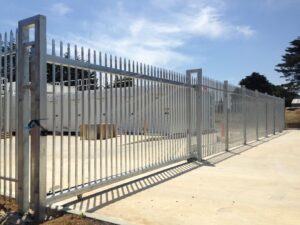
Boswen installed a robust steel picket fence system around the perimeter. The purpose was to create a clear physical boundary while retaining visibility through the fence line.
For schools, that balance can be valuable. A solid boundary may provide privacy, but an open steel picket profile can preserve sightlines for supervision and allow the perimeter to feel less visually closed while still defining restricted areas.
The documented case study also describes the fence as an anti-climb design. When publishing that claim, it is best understood as a design intent of the installed profile rather than as a universal guarantee that no fence can be climbed.
The important project lesson is that the fence profile, height, picket arrangement, gate interfaces and site conditions should be considered together. The perimeter should not become weaker or visually inconsistent at the vehicle entrance.
Automatic Sliding Gate for Controlled Vehicle Access
The vehicle entrance used a motorised sliding gate. Sliding gates are well suited to sites where the gate can move laterally beside the fence line without occupying the driveway with a swing arc.
For a school environment, this configuration can also help keep the vehicle path predictable during opening and closing. The project documentation notes that the system was intended to provide smooth entry and exit control, reduce manual handling for staff and secure the entrance outside operating periods.
The sliding gate formed part of the perimeter rather than interrupting it. That is an important design principle for school projects: the gate frame, infill, opening width and support structure should align with the surrounding fence and the traffic requirements of the site.
The system was also designed to be compatible with access-control equipment, allowing the school to manage authorised entry according to its operational needs.
V2 Motor and Gate Controls
Boswen’s existing case study identifies the automation as an Italian-made V2 system. That manufacturer reference is retained here because it is documented on the live project page.
The value of the motor is not simply that it automates the gate. The operator has to work with the actual gate structure, travel path and expected frequency of use. A school entrance can experience repeated movements during concentrated arrival and departure periods, so alignment and tuning are as important as the motor itself.
The documented scope also included electrical setup and system configuration. For an automatic gate, the mechanical and electrical elements need to work together: a correctly sized motor cannot compensate for a gate that binds, runs out of alignment or has not been properly commissioned.
This is why automated-gate projects should be treated as integrated installations rather than as a separate electrical product added after the gate is built.
Electrical Setup, Installation and Calibration
Boswen’s team carried out the on-site gate installation, electrical setup, tuning and system calibration.
The live case study specifically notes accurate alignment of gate tracks and posts, electrical wiring and system setup, motor calibration and performance tuning, followed by testing and final commissioning.
That sequence matters. Sliding gates depend on accurate mechanical alignment before the operator is tuned. If the track, posts or guides are not correctly positioned, the motor can be forced to work against unnecessary resistance.
Calibration then allows the automation system to be configured around the installed gate. The exact settings are project-specific, which is why this refreshed case study avoids publishing universal force, speed or sensor values that are not documented for the Knox Park installation.
Safety Testing and Commissioning
The existing Boswen project page confirms that safety testing and final commissioning formed part of the installation process.
For a school gate, this stage is especially important because students, staff, visitors and vehicles can all be present around the entrance at different times. Testing should therefore confirm that the installed system performs as intended within the site’s actual operating environment.
This case study should not be read as claiming a specific certification or safety standard that is not named in the source material. The verified statement is that Boswen carried out safety testing and final commissioning as part of the project.
For future school projects, the appropriate safety devices, control logic and access arrangements should be selected according to the gate type, site layout, users and applicable project requirements.
Managing Access During Drop-Off and Pick-Up Periods
Peak school traffic creates a useful test of any access-control design. Morning drop-off and afternoon pick-up compress a high number of vehicle and pedestrian movements into short periods, so a gate that operates inconsistently can quickly become an operational problem.
At Knox Park Primary School, the project brief required the system to operate smoothly during these peak times. The automatic sliding configuration reduced the need for staff to manually handle the gate and provided a controlled closure point outside authorised access periods.
The broader lesson is to define the operating pattern before selecting the gate. Project teams should understand when the entrance is busiest, who is authorised to open it, how visitors are managed, how pedestrian movement is separated from vehicles, and what should happen outside normal hours.
These operational questions influence gate width, automation duty, access control and the location of the entrance itself.
Project Outcome
The completed upgrade gave Knox Park Primary School a coordinated perimeter and controlled vehicle entry system.
Boswen’s published case study reports improved student and staff safety, controlled site access, reliable automated gate operation and a clean, modern entrance appearance.
The result is best understood as a combination of systems: the steel fence establishes the perimeter, the sliding gate controls the vehicle opening, the V2 automation removes the need for routine manual operation, and the electrical setup, tuning and commissioning support reliable daily use.
For education facilities, that integrated approach is often more valuable than choosing individual products independently.
Lessons for School and Childcare Security Projects
The Knox Park Primary School project highlights several practical lessons for schools, childcare facilities, builders and education project managers.
First, fencing and gates should be planned together. The security level and appearance of the perimeter should remain consistent at vehicle and pedestrian access points.
Second, peak-hour operation matters. A school gate may experience concentrated use even if the total daily cycle count is lower than a major industrial facility.
Third, mechanical alignment and commissioning are fundamental to automation performance. The motor should support a properly designed gate, not compensate for structural or alignment issues.
Finally, technical claims should remain project-specific. Gate motors, electrical setups, safety devices and access controls vary by site, so future projects should be assessed on their own dimensions, users and operational requirements.
| Planning a school fencing and automatic gate upgrade? Boswen can assess the perimeter, vehicle entrance, gate configuration and automation requirements and develop a coordinated solution for education facilities. Request a project quote |