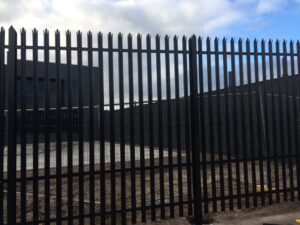
An aluminium slat gate should look like a natural continuation of the fence, but visual matching is only part of the job. Unlike a fixed slat fence panel, a gate moves, carries its own weight and transfers loads into hinges, rollers, guides, posts and automation hardware.
That means the best aluminium slat gate designs balance two goals: keeping the same clean lines, spacing and finish as the surrounding aluminium slat fencing while giving the gate frame enough rigidity for reliable daily operation.
Boswen designs and installs custom aluminium slat fencing and matching manual or automated gate systems for residential, commercial and industrial properties across Melbourne. The gate configuration can be adapted to the opening, site layout, privacy requirements and access needs rather than forcing one standard design onto every property.
This guide focuses specifically on the engineering and visual decisions that matter when a slat fence includes a pedestrian, swing or sliding gate.
Match the Fence and Gate as One Design
The most convincing slat fence gates are designed at the same time as the surrounding fence. Slat width, orientation, spacing, colour and alignment should be coordinated so the gate reads as part of the same elevation.
Horizontal slats often create strong visual lines across a frontage. If those lines stop or shift noticeably at the gate, the entrance can look like a separate product. Vertical slats create a different rhythm but have the same requirement: the spacing and alignment should remain intentional across the fence and gate.
The frame may need to be thicker or more heavily reinforced than the fixed fence panels. Good design accepts that structural difference and conceals or integrates it rather than reducing the frame simply to make the gate look lighter.
This is one reason the gate should not be specified only from a fence elevation drawing. The designer also needs the opening width, gate type, movement path, expected use and automation requirements.
The Gate Frame Does the Structural Work
The aluminium slats are the visible infill, but the gate frame is the moving structure. It keeps the leaf square, carries the infill and transfers loads into hinges, rollers, tracks or cantilever hardware.
Frame design depends on the size and type of gate. A narrow pedestrian gate has different demands from a wide driveway gate. A large sliding gate may require internal bracing or carefully positioned rails to control deflection, while a swing gate places its load into the hinge side and supporting post.
Automation adds another reason for rigidity. The operator works best when the gate moves consistently along the path it was designed for. Excessive flex, sag or twist can change clearances and place additional load on rollers, guides or the motor.
For this reason, frame section, bracing, connection details and support posts should be selected from the actual gate dimensions and duty. The article should not publish one universal frame size because the correct design is project-specific.
Slat Orientation and Spacing
Boswen offers aluminium slat systems with horizontal or vertical layouts, and spacing can be adjusted to control privacy, airflow and visibility. The same decisions apply to the gate, but movement adds a few extra considerations.
Closer spacing gives greater visual privacy and can create a more solid-looking entrance. Wider spacing allows more light and airflow and can reduce the visual mass of the gate. The chosen layout should also consider the surrounding architecture and the way the fence is viewed from the street.
For a matching result, the gate slats should generally coordinate with the adjoining fence rather than introduce a second spacing pattern. However, the gate frame, hardware and automation may require local adjustments to maintain clearances.
Slat spacing can also influence wind loading. A gate with very tight spacing behaves more like a solid surface than an open picket-style gate, so wind exposure should be assessed together with gate size and frame design.
Sliding or Swing Aluminium Slat Gate?
Aluminium slat gates can be built as sliding or swing systems, depending on the site. The best choice is determined first by space and ground conditions, then by traffic, appearance and automation.
A sliding slat gate moves laterally beside the fence. It can be a practical option where there is limited swing space or where vehicles regularly use the entrance. The design needs enough clear run-back beside the opening and a suitable track or sliding support system.
A swing slat gate opens on hinges and can use one or two leaves. It avoids the long lateral run-back of a sliding gate but needs a clear opening arc. Driveway slope must be checked because rising ground can interfere with the bottom of the gate as it opens.
For larger openings, the weight and wind area of each leaf become important. A wide double swing gate may distribute the opening across two leaves, while a sliding system keeps the entrance clear through lateral movement. Neither configuration is automatically better; the site determines which compromises are acceptable.
Gate Weight and Motor Loads
Aluminium is relatively lightweight compared with many steel gate materials, but a finished slat gate can still become substantial once the frame, infill, bracing and hardware are included.
Gate weight affects hinges, rollers, support posts and motor selection. Width matters as well: a longer gate creates different loads even when the material itself is light. The operator should therefore be selected from the completed gate design, not from the material label alone.
For automatic gates, duty cycle is another factor. A residential entrance that opens a few times a day and a commercial entry used repeatedly during business hours may need different automation capacity even if the gate dimensions are similar.
Boswen integrates driveway gates with access controls such as remotes, keypads, cards or fobs, intercoms and vehicle sensors depending on the project. These controls should be selected after the operating pattern and user groups are understood.
Wind Exposure Matters More with Tight Slat Spacing
Wind should be considered whenever a slat gate has a large surface area, particularly where the spacing is tight or privacy is a priority.
A more open slat pattern allows more air to pass through. A tightly spaced gate can catch more wind, increasing the forces acting on the frame, posts, hinges or sliding supports. Large swing leaves are especially sensitive because wind acts on the leaf while it is opening and closing.
Wind exposure varies by site. An entrance between buildings may be relatively sheltered, while a corner block, open industrial site or elevated property may be more exposed. Gate design should therefore reflect the actual location rather than assuming the same frame and operator suit every installation.
Where privacy and wind resistance conflict, the solution may involve adjusting spacing, reducing leaf size, changing gate configuration or increasing structural capacity.
Automation and Access Control
Aluminium slat gates can be integrated with automatic gate systems where the site requires controlled vehicle or pedestrian access. Sliding and swing configurations can both be automated when the structure and geometry are suitable.
The automation system should be planned with the gate rather than added at the end. Motor position, mounting points, power, safety devices and access-control hardware can all affect the frame, posts and surrounding finishes.
For a residential entrance, the system may use remotes and an intercom. A commercial property may need fobs, keypads or controlled visitor access. The right combination depends on who uses the entrance, how often the gate operates and what happens outside normal hours.
The gate must also remain mechanically sound. Automation should not be used to overcome poor alignment, excessive friction or a gate that is too flexible for its opening.
Finishes and Colour Matching
Powder-coated aluminium slat fencing allows the fence and gate to share a consistent colour and finish. Boswen offers custom finishes so the perimeter can coordinate with the building, facade, landscaping or other metalwork.
Colour matching should be considered across the entire gate assembly, not only the slats. Frame members, posts, hardware covers and adjacent panels all contribute to the finished appearance.
For projects using both fence panels and gates, ordering or fabricating them as one coordinated package can make it easier to keep the visual language consistent. The exact coating specification should still be selected for the site exposure and desired appearance.
Aluminium is corrosion-resistant and does not rust in the same way as untreated steel, but the finish should still be protected from unnecessary damage during installation and maintained with routine cleaning.
Aluminium Slat Gate Design Checklist
| Design decision | What to confirm | Why it matters |
| Gate type | Sliding, single swing, double swing or pedestrian | Sets the movement path and structural load |
| Opening | Clear width and height | Determines leaf size and access |
| Frame | Section size, bracing and support posts | Keeps the moving gate rigid and aligned |
| Slat layout | Horizontal or vertical | Maintains visual consistency with the fence |
| Spacing | Privacy, airflow and sightlines | Affects appearance and wind area |
| Ground conditions | Slope, track zone, drainage and clearances | Can rule out or favour certain gate types |
| Wind exposure | Gate size, orientation and shelter | Influences frame and automation loads |
| Automation | Motor duty, safety and access control | Must match the completed gate and usage |
| Finish | Colour and powder-coated components | Creates a consistent fence-and-gate appearance |
When an Aluminium Slat Gate May Not Be the Best Choice
Aluminium slat gates suit many properties, but they are not the right answer for every entrance.
If the main requirement is very high impact resistance or a heavy industrial security barrier, another gate construction may be more appropriate. If the site has no swing space and no lateral run-back, a standard swing or sliding slat gate may not physically fit. Extremely exposed sites may also require a more open infill or different gate profile to manage wind loads.
The best design is the one that balances appearance with structure, movement and site conditions. Choosing the gate material first and ignoring the entrance geometry can produce an attractive concept that is difficult to operate reliably.
Plan the Fence and Gate Together
A well-designed aluminium slat gate should match the fence visually while being engineered as a moving structure. The slats provide the architectural finish; the frame, posts, hinges or sliding hardware provide the strength; and the automation and access-control system determine how the entrance operates day to day.
Boswen can design aluminium slat fencing and matching gate systems as one coordinated package for residential, commercial and industrial properties. A site assessment allows the team to confirm the gate configuration, opening, frame requirements, slat layout, wind exposure and automation before fabrication.
| Planning an aluminium slat fence and gate? Boswen can coordinate the fence profile, slat spacing, gate frame, movement and automation so the entrance looks consistent and operates reliably. Request a free quote |
Frequently Asked Questions
Can aluminium slat gates be automated?
Yes. Sliding and swing aluminium slat gates can be automated when the structure and site are suitable. Motor selection should reflect the final gate size, weight, movement and expected duty.
Should the slat spacing on the gate match the fence?
Usually, matching the orientation and spacing creates the cleanest visual result. Small local adjustments may be required around frames, hardware or operating clearances.
Are horizontal or vertical slats better for a gate?
Neither orientation is universally better. The choice is mainly architectural, but gate width, frame arrangement, privacy and wind exposure should also be considered.
Do aluminium slat gates catch the wind?
They can, especially when slats are closely spaced and the gate is large. Wind exposure should be assessed as part of the frame, post and automation design.
Is a sliding or swing slat gate better?
It depends on the site. Sliding gates need lateral run-back, while swing gates need a clear opening arc and suitable ground levels. A site measure is the best way to compare them.