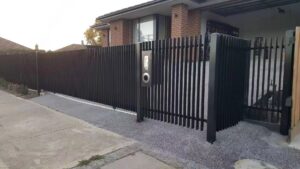
Automatic gates have become an increasingly popular solution for property owners looking to improve security, convenience, and visual appeal. With several gate types and automation systems available, choosing the right option requires an understanding of how each gate functions and where it performs best.
This guide explains the different types of automatic gates, their key features, advantages, and considerations—helping you make an informed decision before engaging an installer.
Why Install an Automatic Gate?
Automatic gates offer more than convenience. When selected correctly, they can:
- Improve site security and access control
- Enhance privacy for residential and commercial properties
- Increase property value and street appeal
- Reduce manual handling and daily wear
- Support controlled vehicle and pedestrian movement
For both residential and commercial properties, automation transforms a standard gate into a functional access system.
Sliding Gates

Sliding gates operate by moving horizontally along a track or cantilever system. They are one of the most widely used automatic gate types across Australia.
Key Features
- Space-efficient operation
- Strong security when paired with quality motors
- Suitable for wide driveways
Best Suited For
- Properties with limited swing space
- Commercial and industrial sites
- Sloped or uneven driveways
Considerations
Sliding gates require sufficient side clearance and regular maintenance of tracks or rollers to ensure smooth operation.
Swing Gates

Swing gates open inward or outward on hinges, similar to a traditional door. They are a popular choice for residential properties.
Key Features
- Classic and elegant appearance
- Simple mechanical design
- Can be automated with underground or above-ground motors
Best Suited For
- Residential driveways with ample clearance
- Low-to-medium traffic usage
Considerations
Swing gates require enough space for full gate movement and are less suitable for sloped or restricted driveways.
Bi-Fold Gates
Bi-fold gates consist of hinged panels that fold back as the gate opens, reducing the required opening space.
Key Features
- Fast opening and closing
- Minimal space requirement
- Modern appearance
Best Suited For
- Urban properties with limited driveway depth
- Commercial sites with high traffic flow
Considerations
Bi-fold gates involve more moving components, making professional installation and alignment essential.
Cantilever Sliding Gates

Cantilever gates operate without a ground track, supported by rollers mounted to one side of the gate.
Key Features
- No ground track required
- Reliable in debris-prone environments
- Smooth operation
Best Suited For
- Industrial and commercial sites
- Locations with uneven ground or heavy vehicle use
Considerations
Cantilever systems require strong structural support and precise engineering.
Telescopic Sliding Gates
Telescopic gates consist of multiple panels that slide and stack behind one another, reducing the space required for gate storage.
Key Features
- Ideal for limited side clearance
- Suitable for wider openings
Best Suited For
- Sites with restricted boundary space
Considerations
More complex mechanisms mean higher installation precision and maintenance requirements.
Vertical Lift Gates
Vertical lift gates move upward rather than sideways or swinging open.
Key Features
- Operates in tight spaces
- High security
Best Suited For
- Industrial or commercial sites
- Locations with limited lateral space
Considerations
These systems require strong support structures and are typically used for specialised applications.
Barrier Arm Gates
Barrier arm gates use a horizontal arm that lifts vertically to control vehicle access.
Key Features
- Fast operation
- Effective traffic control
Best Suited For
- Car parks
- Commercial premises
- Toll or access-controlled areas
Considerations
Barrier arms manage access but do not provide full perimeter security.
Choosing the Right Automatic Gate for Your Property
Selecting the right automatic gate depends on several practical factors:
Property Layout
Available space, slope, and driveway width all influence gate choice.
Usage Frequency
High-traffic commercial sites require robust systems designed for frequent operation.
Security Requirements
Gate design, height, and automation strength play a role in deterring unauthorised access.
Power Source
Automatic gates can operate using mains power, solar systems, or hybrid setups depending on site conditions.
Residential vs Commercial Automatic Gates
Residential properties typically prioritise appearance, privacy, and ease of use, while commercial sites focus on durability, traffic management, and access control.
Understanding this distinction ensures the gate system aligns with how the property is used daily.
Safety and Compliance Considerations
Automatic gates must comply with Australian safety standards to prevent injury or equipment failure. Professional installation ensures:
- Correct motor sizing
- Safe force settings
- Emergency release systems
- Integration of safety devices such as sensors and photocells
Compliance is critical for both residential and commercial installations.
Maintenance and Longevity
Regular maintenance extends the life of an automatic gate system. Key maintenance practices include:
- Inspecting motors and moving parts
- Keeping tracks or rollers clean
- Checking safety sensors
- Ensuring correct alignment
Well-maintained systems operate more reliably and reduce long-term repair costs.
Common Mistakes to Avoid
- Choosing a gate based solely on appearance
- Ignoring site slope and clearance
- Underestimating usage frequency
- Installing automation without professional guidance
Avoiding these mistakes helps ensure long-term performance and safety.
Final Thoughts
Understanding the different types of automatic gates allows property owners to make informed decisions based on function, security, and layout. Whether for residential convenience or commercial access control, selecting the right gate system is a crucial investment.
Once requirements are clear, exploring professionally designed automatic driveway gates ensures the final solution meets both practical and safety expectations.