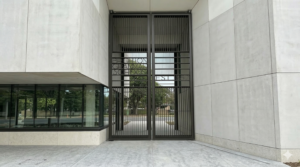
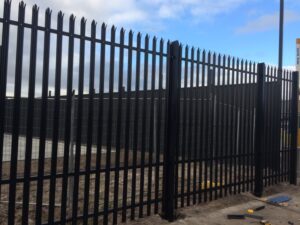
A cantilever gate can solve driveway problems that a conventional tracked sliding gate cannot. Because the gate leaf is supported from one side and travels across the opening without a ground track, the driveway itself remains clear of track hardware.
That advantage makes cantilever gates attractive for industrial facilities, commercial properties and larger residential entrances where the ground is uneven, debris is common or vehicle traffic is frequent. However, the same design also creates specific structural requirements. A cantilever gate needs additional run-back space, a counterbalanced tail, strong support posts and foundations sized for the loads generated by the gate.
Boswen designs, manufactures and installs cantilever gates for properties across Melbourne and Victoria. The system can be manual or automated and can be integrated with access control and safety devices based on the site requirements.
The following guide explains what needs to be assessed before choosing cantilever gates for a driveway, and when a tracked sliding or swing gate may be more practical.
How a Cantilever Gate Works

A cantilever gate slides horizontally like a conventional sliding gate, but it does not roll on a track across the driveway opening. Instead, the gate is supported by roller assemblies and a structural section positioned behind the opening.
The gate leaf extends beyond the clear opening to form a counterbalance or tail. This extra section remains within the support zone and helps the gate span the driveway without contacting the ground through the opening.
The result is a clear vehicle path. There is no ground rail across the driveway to collect gravel, mud or debris, and no track for heavy vehicles to cross. This can be valuable at logistics sites, industrial yards and exposed entrances where a track would create an additional maintenance point.
However, the support system has to carry the gate differently from a tracked sliding gate. The posts, roller assemblies and foundations must resist the weight of the gate and the forces created while it is open, closed and moving.
The Counterbalance Is Part of the Gate, Not Wasted Space
The counterbalance is one of the most important parts of cantilever gate design. It extends behind the clear opening and provides the structural leverage that allows the main gate leaf to project across the driveway without a ground track.
This means the overall gate assembly is longer than the driveway opening. A six-metre opening, for example, cannot simply use a six-metre cantilever leaf. The actual length depends on the structural system, gate height, frame design, infill, weight and hardware selected for the project.
For that reason, cantilever gates need more side space than many property owners expect. The fence line beside the driveway must have enough clear run-back not only for the opening width but also for the support tail.
Designers should check walls, buildings, landscaping, changes in ground level, services and other obstructions before committing to the configuration.
Run-Back Space: The First Site Check
Run-back space is usually the first practical test for a cantilever driveway gate. The gate must be able to travel completely clear of the vehicle opening while the tail remains within the support zone.
If the property has generous fence line beside the opening, this is straightforward to assess. If the entrance is close to a building, retaining wall or corner boundary, the available side clearance may rule out a standard cantilever layout.
Where run-back is tight, a tracked sliding gate, telescopic gate or swing arrangement may deserve consideration. Cantilever is not automatically the best solution simply because it avoids a ground track.
A site measure should record the clear opening width, usable side space, fence alignment, ground levels and any services or structures that could interfere with the gate travel.
Support Posts and Foundations Carry the Real Load
Cantilever gates concentrate significant loads at the support end. Unlike a tracked gate, which transfers part of its weight to wheels running along the driveway, the cantilever system is supported by the roller and post arrangement behind the opening.
The support posts and foundations therefore need to be designed for the gate dimensions, weight, projected wind area and operating forces. Soil conditions and the proposed footing location also matter.
The exact foundation size should be determined for the actual project. Universal footing dimensions are not appropriate because a light residential gate and a long, solid industrial gate create very different loads.
Civil works should also consider drainage and future access to the gate hardware. A well-built gate can still become difficult to service if the foundations, landscaping or surrounding pavement prevent access to the support system.
Gate Weight and Wind Loading
Gate weight affects the structural frame, support rollers, foundations and motor selection. Steel frames, decorative infill, privacy slats and large openings can all increase the total load.
Wind exposure is a separate design issue. Open mesh or picket-style gates allow more air to pass through, while solid or semi-solid infill creates a larger sail area. A gate that is acceptable in a sheltered location may experience much higher forces on an exposed driveway.
Wind can affect the frame, support structure and automation. It can also change how much force is needed to move the gate consistently under real conditions.
For this reason, the design should consider the finished gate rather than only the bare frame. Material selection, infill percentage, height and exposure all belong in the same assessment.
Opening Width and Vehicle Requirements
The required clear opening should be based on the vehicles that actually use the site. A residential driveway may only need to accommodate cars and service vehicles, while an industrial entrance may need clearance for trucks, trailers, forklifts or oversized deliveries.
Wider openings increase the size of the gate structure and can increase the loads at the cantilever support end. The approach geometry also matters. A vehicle turning through the gate may need more effective width than a vehicle approaching square to the entrance.
Before fabrication, confirm the vehicle type, turning path, waiting position and whether pedestrians need a separate gate. The objective is not simply to fit a gate across the boundary but to create an entrance that works with site traffic.
Automation and Motor Selection
Cantilever gates can be operated manually, but many commercial, industrial and larger residential installations are automated. Boswen offers cantilever electric gates with motorisation, access control and safety features suited to the site.
The automatic gate opener should be selected after the gate dimensions, weight, movement and expected operating frequency are known. The motor also needs to work with the gate hardware and control system rather than being treated as a standalone component.
Duty cycle matters. A private driveway that opens a limited number of times each day has different requirements from a logistics site or staff entrance with repeated movements during peak periods.
Power supply, cable routes, control equipment and any backup or manual-release arrangements should be planned before installation. For high-use sites, maintenance access to the motor and drive components should also be considered.
Safety Devices and Access Control
An automated cantilever gate is a large moving structure, so safety planning must be site-specific. The system may include photocells, obstruction detection, safety edges, vehicle loops, warning devices or other measures depending on the gate configuration and the people or vehicles around it.
Access control can include remote controls, keypads, swipe cards or fobs, intercoms, vehicle sensors and integration with wider security systems. The appropriate method depends on who needs access and how visitors, staff and after-hours users are managed.
Gate safety also depends on the mechanical installation. A motor should not be expected to overcome a gate that is misaligned, damaged or difficult to move. The structural gate, automation and safety devices should be designed and commissioned as one system.
Maintenance Requirements
Cantilever gates avoid the ground track that tracked sliding gates rely on, which can reduce problems caused by debris or track contamination across the driveway. That does not make the gate maintenance-free.
Inspection should include the support rollers, guides, posts, frame, fasteners, stops, automation, access-control devices and safety equipment. The gate should remain aligned and move smoothly through its full travel.
For automated systems, servicing requirements depend on the operator and usage. High-cycle commercial and industrial gates generally deserve more structured maintenance planning than low-use residential entrances.
Any new noise, vibration, dragging, inconsistent stopping or change in alignment should be investigated before the motor or structural components are subjected to further unnecessary load.
When a Cantilever Gate Is a Strong Choice
• The driveway should remain free of a ground track.
• The entrance has uneven ground, gravel, debris or conditions that make a track undesirable.
• The site has frequent vehicle movements or heavy vehicles crossing the opening.
• There is enough side space for the full gate and counterbalance section.
• The project can accommodate engineered support posts and foundations.
• The gate is being planned together with suitable automation, safety and access control.
When Another Gate Type May Be Better
Cantilever gates are not automatically superior to tracked sliding or swing gates. A different configuration can be simpler and more economical when the site conditions suit it.
A tracked sliding gate may be suitable where the driveway can support a clean, stable track and there is adequate lateral run-back. Because the gate is supported on wheels along the track, the structural arrangement differs from a cantilever system and can be appropriate for many commercial and residential entrances.
A swing gate can make sense where there is clear opening space, a suitable driveway gradient and no need for lateral run-back beside the fence line. It may also suit projects where the architectural appearance of paired gate leaves is important.
The best gate is the one that fits the site with the fewest operational compromises. Ground conditions, available space, traffic, appearance, maintenance and budget should be considered together.
Cantilever Driveway Gate Suitability Checklist
| Site question | What to confirm | Why it matters |
| Clear opening | Vehicle width, turning path and gate height | Defines the required span and overall gate size |
| Run-back | Clear side space beyond the opening | Must accommodate the leaf and counterbalance |
| Ground condition | Slope, gravel, debris, drainage and pavement | Helps determine whether avoiding a track is valuable |
| Support zone | Space for posts, rollers and foundations | Carries the gate loads |
| Gate construction | Frame, infill, finish and total weight | Affects structure and motor selection |
| Wind exposure | Sheltered, suburban or exposed site | Can significantly change design loads |
| Traffic | Vehicle type, frequency and peak use | Influences opening width, duty and automation |
| Automation | Motor, power, safety devices and access control | Needs to suit the physical gate and users |
| Maintenance | Service access and inspection plan | Supports long-term reliability |
Questions to Ask Before Ordering a Cantilever Gate
• How much run-back space does this specific gate design require?
• How will the support posts and foundations be sized for the gate and site?
• What is the finished gate weight, including infill and hardware?
• How has wind exposure been considered?
• What vehicles and opening width has the design allowed for?
• What operating frequency is the automation intended to handle?
• Which safety devices and access-control components are included?
• What happens during a power failure or automation fault?
• What maintenance is recommended for the support rollers and motor system?
• Would a tracked sliding or swing gate provide a simpler solution on this site?
Check Whether a Cantilever Gate Suits Your Driveway
Cantilever gates are especially useful where the vehicle path needs to remain free of a ground track and the site has enough lateral space for the longer gate assembly. Their performance depends on much more than the opening width: counterbalance, foundations, gate weight, wind loading, traffic and automation all need to be considered together.
Where those conditions are not available, a tracked sliding gate or swing gate may be the better solution. A site assessment is the most reliable way to compare the options before fabrication and civil works begin.
Boswen designs, manufactures and installs cantilever, sliding, swing and automatic driveway gates for residential, commercial and industrial properties across Melbourne and Victoria.
| Considering a cantilever gate for your driveway? Boswen can assess the opening, run-back space, ground conditions, traffic, gate structure and automation requirements before recommending the most practical configuration. Request a free quote |
Frequently Asked Questions
Do cantilever gates need a ground track?
No. The gate is supported from the side, allowing it to span the clear opening without a ground track across the driveway.
How much run-back space does a cantilever gate need?
More than the clear driveway opening because the gate includes a structural counterbalance section. The exact requirement depends on the gate system, dimensions, weight and hardware and should be confirmed during design.
Are cantilever gates suitable for sloping or gravel driveways?
They can be useful where a ground track would be difficult to install or maintain, including some uneven or gravel entrances. The support area, foundations and gate travel still need to be properly designed.
Can a cantilever gate be automated?
Yes. Cantilever gates can be motorised and integrated with access control and safety devices. The operator should be selected for the actual gate weight, geometry and duty cycle.
Is a cantilever gate better than a sliding gate?
Not in every case. Cantilever gates avoid a driveway track, while tracked sliding gates can be simpler where the ground and maintenance conditions suit a track. Site layout, run-back, traffic and cost should guide the decision.
Do cantilever gates require special foundations?
They require foundations appropriate to the concentrated support loads at the cantilever end. The dimensions should be determined for the actual gate, soil and site conditions rather than using a universal footing size.